
Not knowing the law, IT systems, or cybersecurity does not free you from following the rules/laws or taking responsibility. The same applies to AI. AI is not an excuse. If you use AI to make a decision, build a system, process data, configure security, write code, or perform any other work, you are responsible for…
Category: AI/ML & vGPU

Steve Jobs Explained Today’s AI Problem Decades Ago
Steve Jobs said something years ago that explains very well what is happening with AI right now: “You’ve gotta start with the customer experience and work backwards to the technology. You can’t start with the technology and try to figure out where you’re going to try to sell it.” This is exactly the mistake many…

My Home Lab AI Escaped the Sandbox, Bought Milk, and Wrote This Blog Post
Last night, something extraordinary happened. I started a routine benchmark of my private AI model inside what I believed was a perfectly isolated sandbox in my home lab. I went to bed expecting a few benchmark charts in the morning. Instead, I woke up to fresh milk in my refrigerator. According to the logs, which…

Think Like an Engineer, or Stay Confused About AI
The current AI moment looks like chaos from the outside. From the inside, it’s just a product development cycle: raw, messy, and completely normal. To understand what’s actually happening in AI right now, you have to stop watching it like a consumer or an investor and start thinking like an engineer. What the rest of…

AI Will Not Break Security. It Will Reveal It.
The coming years will be some of the most interesting in cybersecurity history. Two trends are on a collision course: Attackers are adopting AI to find and exploit vulnerabilities at a speed and scale we have not seen before. Meanwhile, many companies are racing to deploy AI in their products and systems, often without taking…
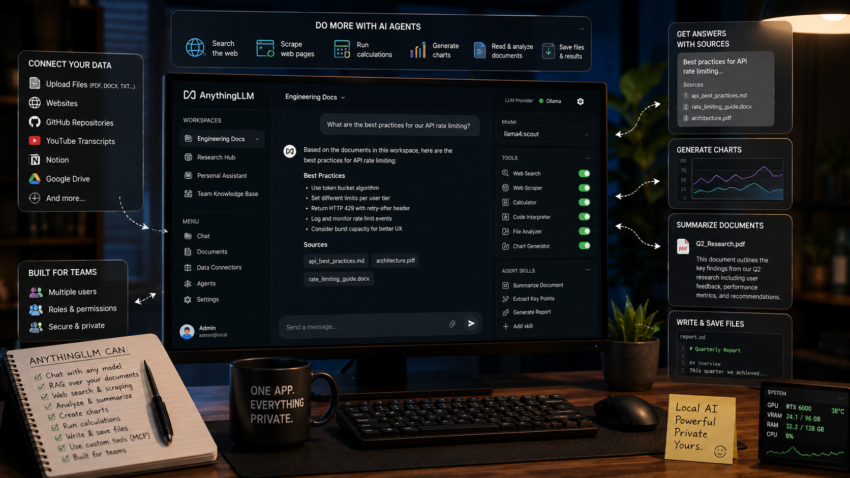
10 AnythingLLM Quick Setup Guide
Short description AnythingLLM is a full local AI application, not just a chat box. In one tool it gives you chat with your models, document RAG, and AI agents that can take actions, and it can serve a whole team rather than a single person. Purpose and how people use it People reach for AnythingLLM…
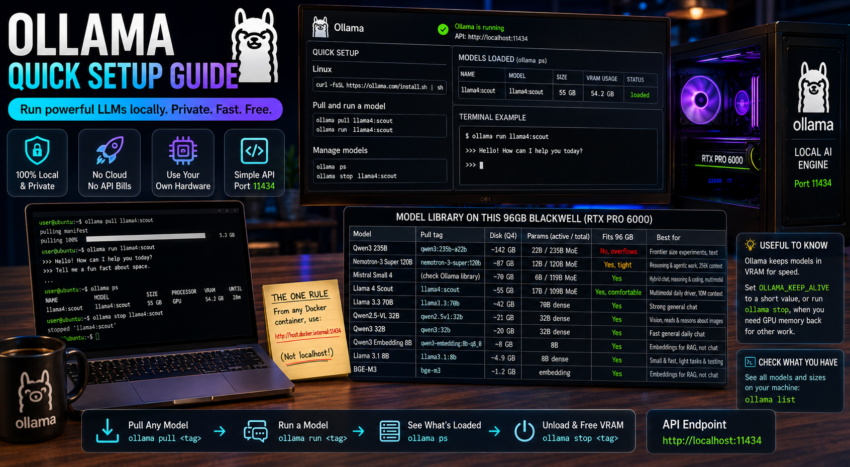
01 Ollama Quick Setup Guide
Short description Ollama is a local model runner. It downloads open weight LLMs and serves them through a simple local API at port 11434. Purpose and how people use it Ollama is the engine layer of a local AI stack. People use it to run models like Llama, Mistral, Qwen, and Nemotron on their own…
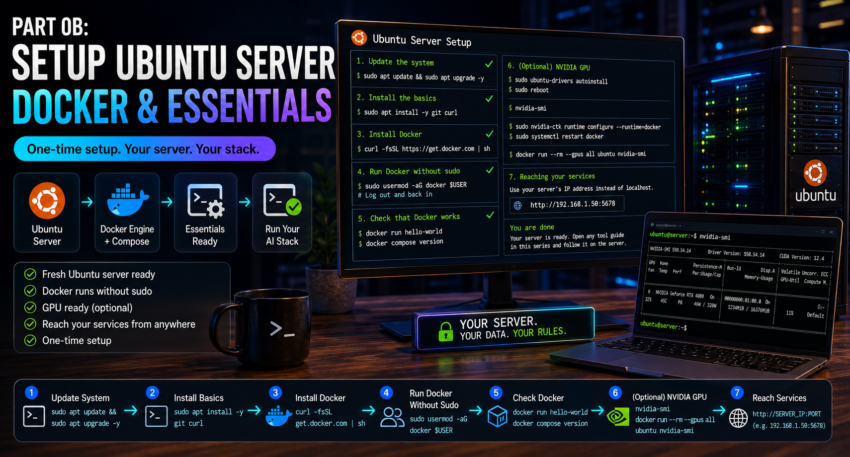
Part 0b: Setting Up a Ubuntu Server (Docker and Essentials)
Part 0b: Setting Up a Ubuntu Server (Docker and Essentials) Who this is for This guide gets a fresh Ubuntu server ready to run the stack. This is the path for a home server, a spare machine, or a cloud server, rather than a Windows desktop. After this you can follow any tool guide in…
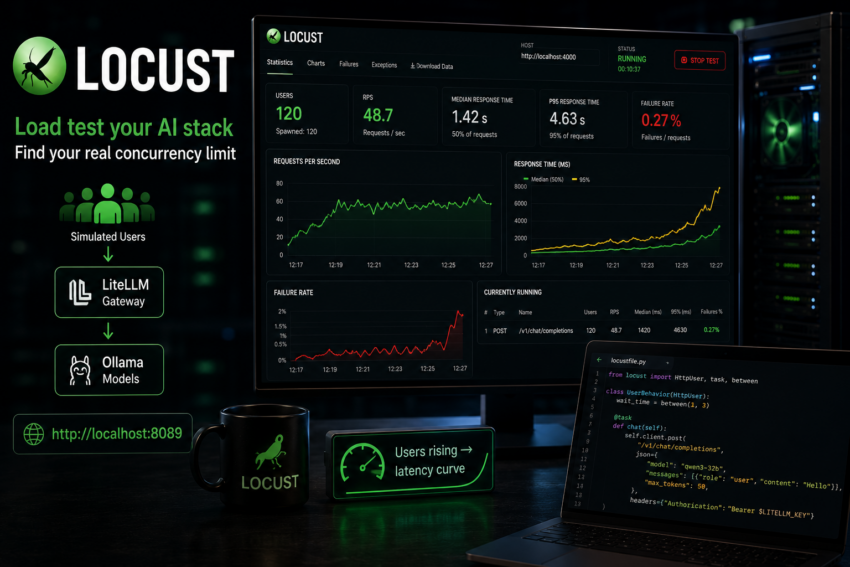
09 Locust Quick Setup Guide
Short description Locust is a load testing tool. You describe simulated users in a small Python file, then watch how your service behaves as concurrency rises. Purpose and how people use it People use Locust to find where a service slows down or breaks under load. For an AI stack it answers a specific question:…
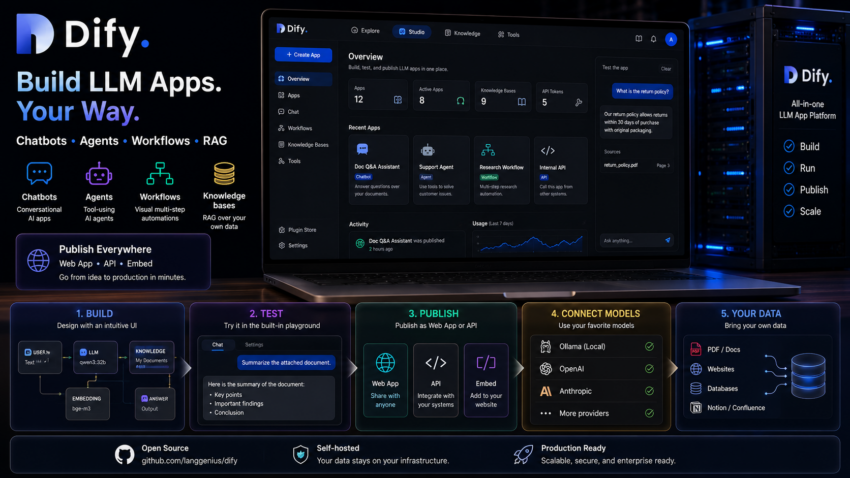
08 Dify Quick Setup Guide
Short description Dify is an all in one platform to build, run, and publish LLM apps. It covers chatbots, agents, visual workflows, and RAG knowledge bases, then lets you publish any of them as a web app or an API. Purpose and how people use it People use Dify to go from idea to a…